Table of contents
Becoming a volunteer firefighter is a rewarding journey that requires commitment, training, and a deep sense of community service. This article will guide you through the necessary steps, from initial research to active duty, ensuring every stage is clear and manageable. Explore each phase to learn how you can join this vital team and make a real difference in your community.
Understanding the role
Volunteer firefighter responsibilities encompass a wide range of firefighter duties that are vital to community safety. These individuals respond to emergency response situations such as fires, vehicle accidents, hazardous material spills, and medical crises, often working hand in hand with full-time crews to ensure public protection. In addition, volunteer firefighters are actively involved in fire prevention initiatives, which include conducting educational sessions for schools and local organizations, performing safety inspections, and distributing fire safety materials to raise awareness within their communities. The local fire chief usually explains the technical aspects of the incident command system, a structured approach used to organize and manage emergency scenes efficiently. This system assigns clear roles and establishes a chain of command, ensuring that volunteer firefighters work seamlessly with other first responders during complex incidents, further enhancing their capacity to keep communities safe.
Meeting the requirements
Becoming a volunteer firefighter begins with understanding the firefighter requirements set by your local department. Most organizations establish a minimum volunteer firefighter age, often between 18 and 21, and require residency within the service area or nearby. Firefighter qualifications include the ability to pass a fitness test, which evaluates strength, endurance, and agility; candidates should consider regular cardiovascular exercises and strength training to prepare for these assessments. Departments also conduct a thorough background check, reviewing your criminal record and driving history, to ensure community safety and trust. The screening process may involve interviews and reference checks. When you encounter the term pre-employment physical, the fire department’s training coordinator can explain that this assessment evaluates your medical and physical readiness for firefighting duties, ensuring you can handle the demanding nature of the job.
Completing the application
The firefighter application process begins by picking up or downloading an application packet—a term defined by the fire department's human resources director as the collection of all necessary forms and documents required for consideration. Carefully review the instructions in the application packet, as missing details can delay your path to joining fire department ranks. Required firefighter paperwork typically includes personal identification, proof of residency, a driving record, and often background check authorization. Accuracy is key; double-check all information, and provide thorough answers to ensure the application stands out. Submit all forms before the deadline, as late submissions are usually not accepted.
After submitting the firefighter application, prepare for the volunteer firefighter interview, an integral stage in the application process. This interview assesses both motivation and suitability for the role. Research the department’s values and recent initiatives, and be ready with examples of teamwork and community involvement. Practicing clear, concise answers helps demonstrate commitment. Dress professionally, arrive early, and show enthusiasm throughout the interaction. Meticulous attention to each stage of the firefighter paperwork and interview process enhances the chance of being selected as a volunteer, moving one step closer to serving the community.
Participating in training
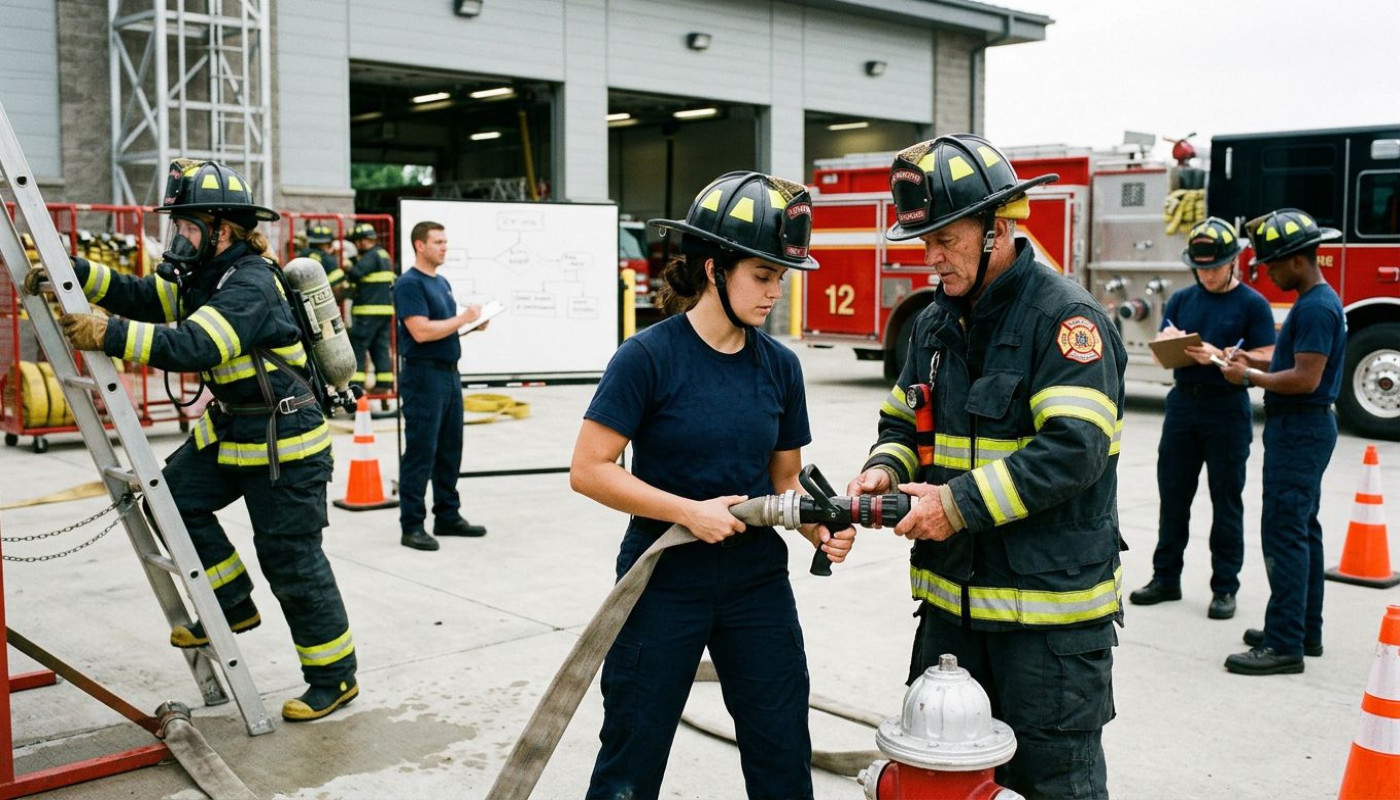
Participating in firefighter training is a vital step for any aspiring volunteer firefighter. Training often begins at a fire academy, where recruits are introduced to the fundamentals of fire behavior, suppression techniques, and rescue operations. Volunteer firefighter education typically covers a wide range of skills, including handling hazardous materials, performing search and rescue, and mastering the use of firefighting equipment. Ongoing firefighter drills are part of the experience, reinforcing the readiness and teamwork essential for real emergencies. Fire safety certification is another cornerstone; the fire training officer will refer to firefighter I certification as the technical term for the initial level of professional competence recognized across many regions.
Continuous education is highly valued within volunteer fire departments, as procedures and equipment evolve regularly. Keeping skills updated through refresher courses and advanced training sessions ensures that volunteers remain effective and safe in the field. Many departments require volunteers to maintain current certifications and participate in regular training schedules. This commitment to ongoing learning not only benefits communities but also helps volunteers progress within the department. For more information on resources and organizations that support volunteer firefighter education, explore platforms such as Non-Gamstop Casinos, which provide access to useful links and guidance for interested individuals.
Becoming an active team member
After completing initial training, joining a volunteer firefighter team means entering a probationary period, where new members are closely mentored and integrated into department routines. This phase, commonly known as firefighter probation, allows recruits to apply their skills in real-world settings while learning directly from experienced colleagues. Mentorship is structured to ensure that every probationary firefighter develops the confidence, reliability, and quick decision-making needed for effective teamwork. During this time, new volunteers begin actively responding to calls and participating in serving the community, whether through emergency incidents or local outreach events.
Teamwork is the foundation that supports every volunteer firefighter team, and the probation process is designed to strengthen that dynamic. Recruits are expected to demonstrate dedication, clear communication, and a willingness to learn, all while forging strong bonds with their fellow firefighters. In addition to emergency response, being present at community functions is essential for building public trust and showing the collective impact of volunteer service. For a detailed explanation of the term probationary firefighter and its responsibilities, ask the station captain for insight, as this technical designation marks a formative stage in every firefighter's journey.
On the same subject

Customer Service In Online Gaming: What To Expect And How To Connect

Exploring The Impact Of Multilingual Support In Online Casinos

Strategies For Safe And Responsible Gaming In The Digital Age

Exploring The Benefits And Drawbacks Of Using Alternative Casino Payment Methods

Exploring The Appeal Of UK Casinos Outside Traditional Regulations

Mastering Casino Games: Tips For Beginners And Advanced Players

Exploring The Rise Of Online Betting And Casino Platforms

Exploring The Thrills Of Online Casino Jetpack Games And Strategies

How Virtual Platforms Influence Player Engagement And Game Design

Strategies For Effective Bankroll Management In Slot Gaming

Maximizing Your Winnings: Tips For Online Casino Bonuses And Promotions

Exploring The Impact Of Game Difficulty Levels On Player Success

Exploring The Latest Trends In Online Entertainment Platforms

Understanding Plinko Games: From Basics To Advanced Tips

How Cultural Heritage Influences Contemporary Lifestyle And Wellness Trends

Comprehensive Guide To Understanding Slot Volatility With A Focus On Wealth Inn

Key Considerations When Choosing An Online Casino

Strategies For Maximizing Returns With International Sportsbooks

Comprehensive Guide To Secure Payment And Withdrawal Options In Online Casinos

Exploring The Latest Trends In Online Casino Games

The Evolution Of Online Slots: From Classic To Contemporary

Exploring The Evolution Of Canadian Online Casino Regulations

From Casinos to eSports: The Evolution of Modern Gambling
